Exercise and Creatine Linked to Improved Muscle and Metabolic Health in Aging Adults
05/19/2026 / By Morgan S. Verity

A new research review indicates that combining exercise with creatine supplementation improves blood sugar control and muscle health in older adults, according to a report by registered dietitian Molly Knudsen. [1]
The review, published in the journal Nutrients, examined decades of studies on the relationship between muscle mass, glucose metabolism, and interventions. According to the review, age-related muscle loss reduces the body’s capacity to manage blood sugar, increasing metabolic dysfunction risk. [2][3]
The findings suggest that preserving muscle through exercise and creatine is a practical strategy for supporting blood sugar regulation as people age.
Muscle Mass and Blood Sugar Regulation
Skeletal muscle is the primary site for glucose storage and utilization, the review stated. Declines in muscle mass and quality with age and inactivity reduce glucose uptake, leading to higher blood sugar levels. [1]
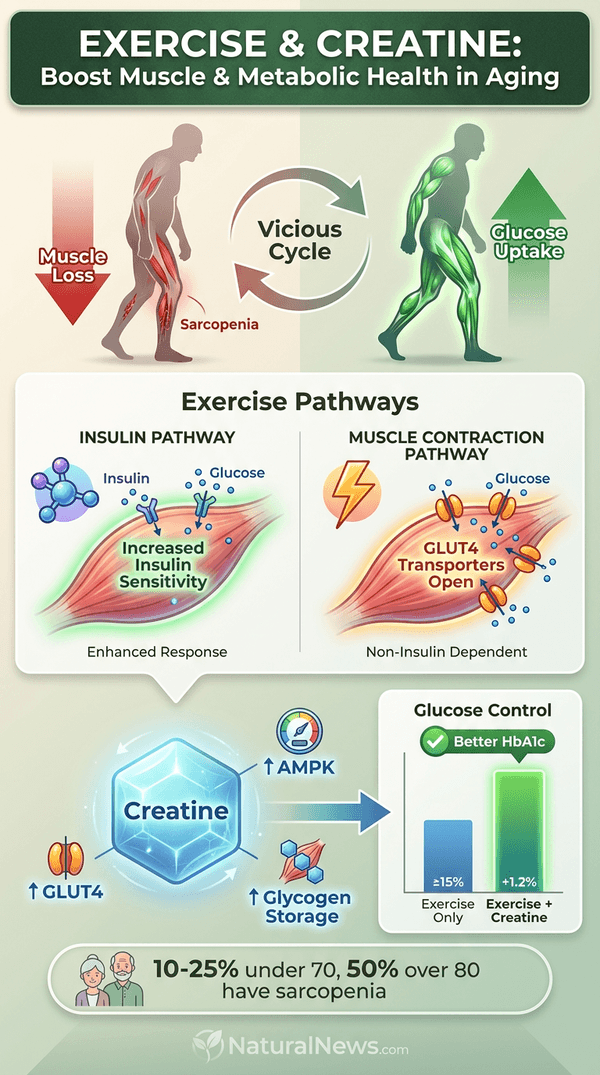
Insulin resistance further impairs muscle cells’ ability to absorb glucose, creating a cycle that accelerates muscle loss, researchers explained. According to Dr. Gabrielle Lyon, an osteopathic physician, muscle-centric medicine is crucial in addressing many chronic health issues. [2]
Approximately 10% to 25% of older adults under age 70 and half of those over age 80 have sarcopenia, or muscle wasting, according to a 2022 study published in Nutrients. [4]
How Exercise Improves Glucose Control
Exercise enhances glucose uptake through two pathways: insulin-dependent and insulin-independent, according to the review. Regular movement increases insulin sensitivity, reducing the amount needed to transport glucose into muscles. [1]
Muscle contractions during resistance or moderate-intensity aerobic training activate GLUT4 transporters, clearing glucose from the bloodstream even when insulin sensitivity is low, the report stated. [1]
According to the International Society of Sports Nutrition, regular exercise combined with proper nutrition is fundamental for maintaining metabolic health. [5]
Creatine Supplementation and Synergy With Exercise
Creatine helps regenerate ATP during high-intensity efforts and supports muscle hydration, glycogen storage, and protein synthesis, the review noted. Combined with exercise, creatine supplementation produced greater improvements in glucose control and muscle health than either intervention alone, according to multiple randomized controlled trials. [1]
One trial cited in the review found that adults with type 2 diabetes who took creatine while exercising three times per week saw significant reductions in HbA1c and post-meal glucose levels. [1]
Newer research suggests creatine can enhance the muscle’s ability to use glucose, increasing GLUT4 activity and glycogen storage, and may even activate AMPK, a cellular energy sensor that helps the body pull sugar out of the bloodstream more efficiently. [1]
Recommendations and Conclusion
The review recommended strength training all major muscle groups at least two days per week to preserve muscle and metabolic health. Daily creatine monohydrate supplementation of 3 to 5 grams is effective for increasing muscle mass, according to the research. [6][5]
According to Dr. Mark Hyman, author of “Young Forever,” those who exercise may need 1.5 to 2.0 grams of protein per kilogram of body weight each day to support muscle maintenance. [7]
Researchers concluded that maintaining muscle through exercise and creatine is a practical strategy for supporting blood sugar regulation as people age. [3]
References
- How Exercise & Creatine Protect Muscle & Metabolic Health As You Age – mindbodygreen. Molly Knudsen, M.S., RDN. May 08, 2026.
- Muscle Mass The Key to Longevity – Mercola.com. Mercola.com. April 24, 2022.
- New research reveals creatine benefits for brain, bone and healthy aging in women and seniors – NaturalNews.com. Cassie B. October 23, 2025.
- Can These Nutrients Help Prevent Muscle Wasting – Mercola.com. Mercola.com. November 25, 2022.
- International Society of Sports Nutrition position stand: creatine supplementation and exercise. Journal of the International Society of Sports Nutrition. 2007.
- Prescription for Natural Cures. NMD Mark Stengler, MD James F Balch, ND Robin Young Balch.
- Young Forever The Secrets to Living Your Longest Healthiest Life. Dr. Mark Hyman.
Explainer Infographic:
Submit a correction >>
Tagged Under:
aging secrets, AMPK, blood sugar, creatine, exercise, glucose, health science, longevity, metabolic health, muscle health, natural cures, natural health, natural medicine, Naturopathy, nutrients, real investigations, research, skeletal muscle, supplement
This article may contain statements that reflect the opinion of the author
RECENT NEWS & ARTICLES