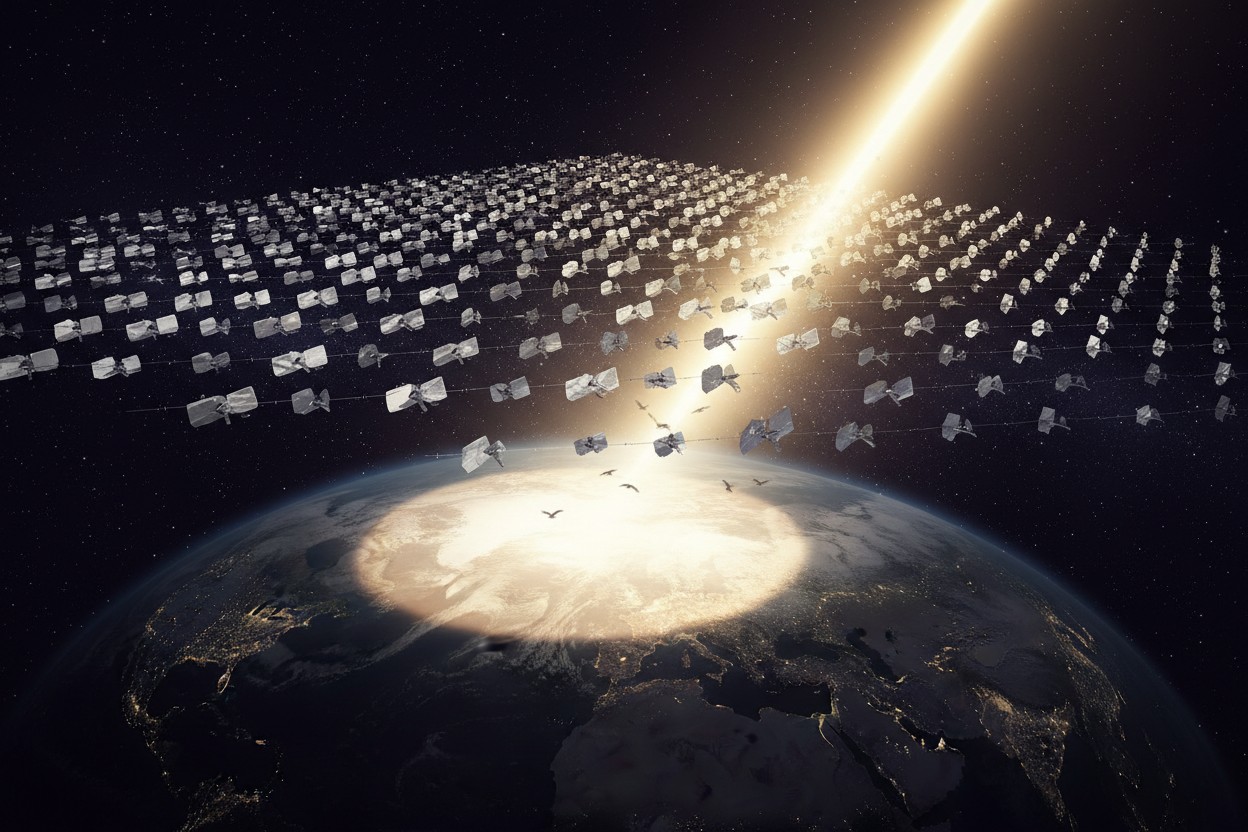
Solar superstorm reveals dangers for future human missions to Mars
04/09/2026 / By Jacob Thomas
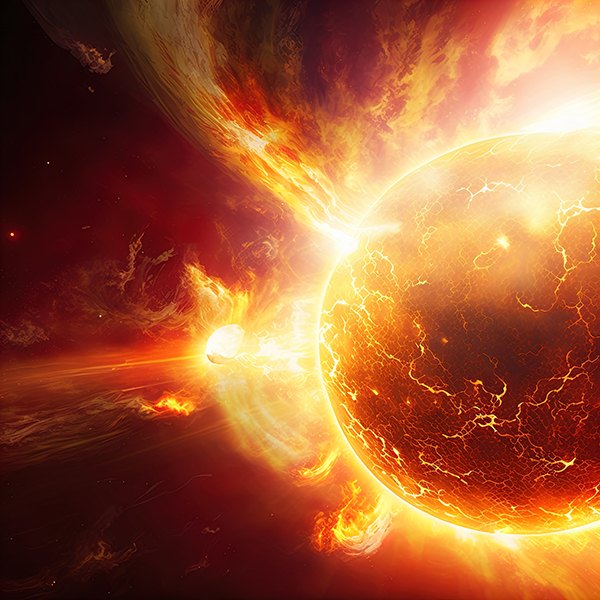
- A historic May 2024 solar storm simultaneously caused intense auroras on Earth and a record-breaking atmospheric upheaval on Mars.
- The event was accidentally measured by two European orbiters, revealing Mars’ ionosphere swelled to 278% of its normal density.
- Jacob Parrott found that current models underestimated the storm’s impact, likely due to an unaccounted-for chain reaction in the atmosphere.
- This exposes a critical risk for future human missions, as such storms could scramble vital communications and navigation on Mars.
- The data underscores that Mars, lacking a global magnetic field, is extremely vulnerable and requires better storm modeling for astronaut safety.
A historic solar superstorm that painted Earth’s skies with dazzling auroras in May 2024 simultaneously unleashed a record-breaking atmospheric upheaval on Mars, accidentally captured by two orbiting spacecraft. The unprecedented data reveal that current models may severely underestimate the storm’s impact, raising new concerns for future human missions to the Red Planet.
In early May 2024, millions on Earth marveled at auroras visible as far south as London and the Mediterranean, a spectacle driven by the most intense geomagnetic storm to hit the planet since 1989.
Unbeknownst to observers, that same eruption from the Sun was hammering Mars. By sheer coincidence, a routine scientific measurement was underway, handing researchers a front-row seat to the planetary event.
Two European spacecraft, Mars Express and the ExoMars Trace Gas Orbiter, were performing a “mutual radio occultation” experiment. This technique involves the orbiters beaming radio signals to each other through the Martian atmosphere. On May 15, just minutes after a powerful X3-class solar flare struck Mars, these signals recorded a shocking transformation.
The data, published in Nature Communications, shows Mars’ lower ionosphere, a layer of electrically charged particles 90-110 kilometers above the surface, ballooned to 278% of its normal density. This is the largest spike ever documented for that atmospheric region.
A higher layer also expanded, but by a comparatively modest 45%. Both layers were lifted about 6.5 kilometers higher than usual, indicating significant atmospheric heating.
Humanity needs more preparation before colonizing Mars
The storm was a triple assault. A coronal mass ejection (CME) of solar plasma hit Mars about 26 hours before the measurement, followed by a wave of high-energy particles 16 hours later.
As noted by BrightU.AI‘s Enoch, CME is an explosion on the sun that blasts a massive cloud of plasma and magnetic field into space. If directed at Earth, it can trigger intense geomagnetic storms capable of damaging satellites and electrical grids.
The final blow was the X3 flare itself, arriving almost simultaneously with the spacecrafts’ observation window. The record-breaking surge has exposed a potential flaw in existing space weather models. The established theory predicted that to cause a 278% density increase, the solar X-ray flux at Mars would need to increase more than sevenfold. Data from NASA’s MAVEN orbiter and a NOAA satellite, however, showed the flux only tripled.
Researchers, led by Jacob Parrott of Imperial College London, propose that models have underestimated a chain-reaction effect called secondary ionization. They suggest that as the solar flare’s energy spectrum “hardened,” each high-energy photon triggered a far greater cascade of collisions than previously accounted for, amplifying the atmospheric disruption.
This finding has direct implications for the future of human exploration. NASA, ESA and private companies are actively planning crewed missions to Mars, where astronauts will be exposed to such solar fury. Storms capable of tripling ionospheric density could scramble radio communications and navigation systems critical for surface operations and safety.
The May 2024 event serves as a stark reminder of the threats posed by the solar maximum. While Earth’s magnetic field largely shields the planet, Mars lacks a global magnetic shield, leaving its atmosphere fully exposed.
The accidental capture of this event provides mission planners with one of the most extreme data points on record. As scientists refine their models, the message is clear: preparing for life on Mars means preparing for solar storms far more potent than our current understanding predicts.
Watch this video about a massive solar flare.
This video is from Rick Langley’s channel on Brighteon.com.
Sources include:
Submit a correction >>
Tagged Under:
2024 solar event, astronaut safety, breakthrough, coronal mass ejection, cosmic, discoveries, future science, geomagnetic storm, ionosphere, Mars, Mars missions, research, satellite data, solar flare, solar maximum, solar radiation, solar storm, Space, space exploration
This article may contain statements that reflect the opinion of the author
RECENT NEWS & ARTICLES