Earth-sized world in “Goldilocks zone” offers icy intrigue in search for fife
10/10/2026 / By Jacob Thomas
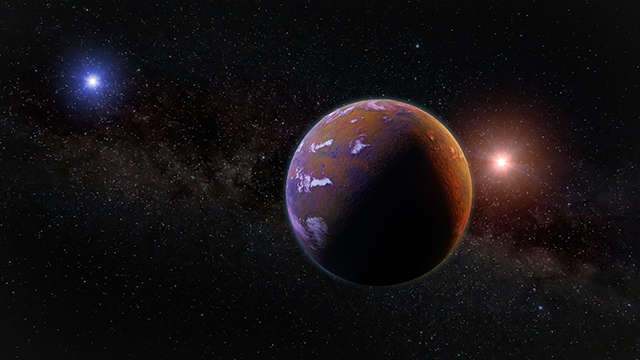
- Astronomers have discovered HD 137010 b, an Earth-sized planet in the habitable zone of a Sun-like star located 146 light-years away.
- The planet is notable for its Earth-like size and an orbital period of about 355 days, placing it in its star’s “Goldilocks zone” where liquid water could theoretically exist.
- Initial estimates suggest a frigid surface temperature similar to Mars. However, models indicate a 40-51% chance it could be habitable if it possesses a heat-trapping, greenhouse-gas-rich atmosphere.
- The planet’s host star is relatively bright, making this candidate a prime target for detailed follow-up observations to confirm its existence and study its properties.
- HD 137010 b is currently a “candidate” planet, requiring confirmation from additional observations. Future telescopes, like the James Webb Space Telescope, may be needed to analyze its potential atmosphere.
In a significant step forward for planetary science, an international team of astronomers has announced the discovery of a compelling new candidate in the search for habitable worlds: an Earth-sized planet orbiting a Sun-like star, in its Goldilocks zone, 146 light-years away.
While its surface may be as frigid as Mars, scientists calculate a strong possibility that conditions could be just right for liquid water, the essential ingredient for life as we know it.
As noted by BrightU.AI‘s Enoch, “The Goldilocks zone, also called the habitable zone, is the orbital region around a star where temperatures are just right, neither too hot nor too cold, for liquid water to exist on a planet’s surface. This condition is considered essential for life as we know it. Earth orbits within our Sun’s Goldilocks zone.”
The planet, designated HD 137010 b, was identified using data from NASA’s venerable Kepler Space Telescope, captured during its extended K2 mission in 2017. The detection hinged on a single, precious observational brief transit where the planet passed in front of its host star, causing a telltale, minuscule dip in starlight.
What makes this candidate exceptional is its combination of familiar characteristics. It is not only similar in size to Earth but also boasts an orbit startlingly like our own, completing a year in approximately 355 days. This places it within its star’s habitable zone, the region where temperatures could allow for liquid water on a planet’s surface.
“This is the first planet candidate with Earth-like radius and orbital properties transiting a Sun-like star bright enough for substantial follow-up observations,” stated the research team, which includes scientists from Australia, the U.K., the U.S. and Denmark. Their findings were published in The Astrophysical Journal Letters.
However, HD 137010 b sits near the outer, cooler edge of this habitable zone. Researchers estimate it receives less than one-third of the stellar heat and light that Earth enjoys from the Sun.
Preliminary climate models suggest its surface could be a bitter minus 68 C (minus 90 F), comparable to a harsh Martian day.
HD 137010 b remains a tantalizing, icy mystery
Yet, the story does not end in a deep freeze. Scientists point to a critical caveat: the potential for a substantial atmosphere.
A dense atmosphere rich in carbon dioxide could create a potent greenhouse effect, effectively trapping heat and raising global temperatures. The study calculates that, with such an atmosphere, there is a 40-51% chance the planet’s climate actually falls within the habitable range.
“This candidate represents a unique opportunity,” said co-author Chelsea Huang of the University of Southern Queensland. “Most other Earth-like exoplanets around sun-like stars are much farther and fainter. Here, the brightness of the host star opens the door for detailed follow-up.”
The discovery comes amid other promising news in exoplanet research. Just last year, NASA’s Transiting Exoplanet Survey Satellite (TESS) detected another Earth-sized world over 100 light-years away within its star’s habitable zone.
Furthermore, Brazilian scientists recently presented fresh evidence that the nearby exoplanet Ross 128b, located a mere 11 light-years away, likely has a moderate climate and a rocky composition, bolstering its candidacy for potential habitability.
HD 137010 b remains officially a “candidate” planet, as only one transit event has been captured. Its year-long orbit makes catching another a patient astronomer’s game.
Confirmation and deeper analysis may come from other space-based observatories like NASA’s TESS or the European Space Agency’s CHEOPS (CHaracterising ExOPlanets Satellite) mission, though some definitive answers, particularly about the composition of its potential atmosphere, may require the power of next-generation telescopes like the James Webb Space Telescope.
For now, HD 137010 b stands as a tantalizing, icy mystery, a world with familiar dimensions in a familiar orbit, challenging scientists to determine if it is a frozen desert or a potentially habitable planet cloaked in a life-sustaining shroud.
Watch this video about NASA discovering new planets.
This video is from the Spirit2all channel on Brighteon.com.
Sources include:
Submit a correction >>
Tagged Under:
astronomy, candidate planet, cosmic, discoveries, Earth-sized planet, exoplanet, Goldilocks zone, greenhouse effect, habitable zone, HD 137010 b, James Webb Space Telescope, K2 mission, Kepler space telescope, real investigations, research, Space
This article may contain statements that reflect the opinion of the author
RECENT NEWS & ARTICLES