Study: Aquatic Exercise Tied to Largest BDNF Increase, but Researchers Urge Caution
08/16/2026 / By Edison Reed

A review of 47 randomized controlled trials involving 1,815 adults over age 60 has found that water-based exercise was associated with the largest estimated increase in brain-derived neurotrophic factor (BDNF), a protein linked to brain health, according to the review.
The findings appeared in Frontiers in Physiology and were reported by mindbodygreen. The analysis compared seven categories of exercise rather than examining a single workout in isolation. The researchers said the aquatic exercise result rests on only two studies, so the evidence is limited.
They described the finding as promising, but said it must be confirmed in larger trials before water-based workouts can be classified as the best exercise for brain health. The caution applies to the ranking itself, the researchers indicated, because the number of trials supporting each exercise type varied.
Study Design and Methods
The researchers conducted a Bayesian network meta-analysis, a method that allows multiple interventions to be compared even when those treatments were not directly tested against each other. This approach is useful in exercise research because few large trials compare many training modes at once.
The review included 47 randomized controlled trials involving 1,815 adults over age 60. Participants completed programs including aerobic exercise, resistance training, aquatic exercise, yoga and tai chi, combined strength and cardio, high-intensity interval training, and multicomponent exercise. The researchers measured circulating BDNF levels and examined exercise dose, intensity, frequency and program length.
BDNF, a growth factor involved in neuron survival and synaptic plasticity, has been described as the brain’s “Miracle-Gro” protein [1]. Physical activity has been shown to boost BDNF and neuroplasticity [2], which makes the protein a central marker in studies of exercise and aging. The review also analyzed whether longer or more frequent sessions increased BDNF beyond shorter programs.
Findings by Exercise Type
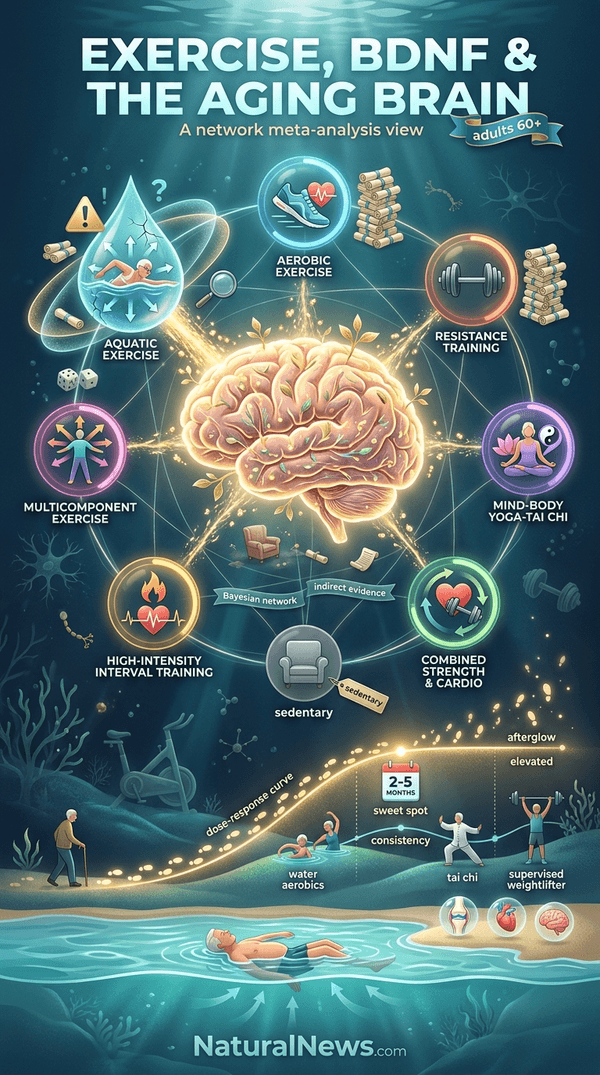
Aquatic exercise showed the largest estimated increase in BDNF, followed by mind-body exercise such as yoga and tai chi, and then mixed exercise programs, according to the review. Aerobic exercise, resistance training and combined cardio-strength workouts also raised BDNF compared with being sedentary. The ranking was based on estimated changes across trials, not on direct measurements of every exercise type against every other type.
The researchers found that more exercise was not consistently better. Many of the strongest results came from programs lasting about two to five months, and some studies found that BDNF remained elevated after the structured program ended.
Separate research has linked a 12-week cycling program to increased BDNF in overweight adults [3]. Resistance training has also been shown to stimulate BDNF production [4].
Implications for Older Adults
The broader pattern suggests that several forms of movement can support brain health, the review stated. Activities such as swimming, water aerobics, yoga, tai chi, walking and lifting weights may all help stimulate BDNF.
Tai chi and similar mind-body exercises may support cognitive function through gains in balance, coordination, and motor fitness [5]. Strength training has been linked to improved cognition and mental health [6].
Researchers called for larger trials to confirm whether aquatic exercise truly outperforms other modalities. The review did not recommend replacing current exercise habits with a single routine.
Even a brief aerobic workout with light resistance has been reported to support cognitive function through BDNF [7], and short, brisk walks have been linked to brain health in older adults [8]. The authors said the overall evidence points to a range of useful options.
Takeaway
The takeaway, according to the review’s authors, is that older adults may have multiple exercise options for supporting BDNF levels. Exercise variety and long-term adherence may matter more than selecting one “best” workout. Research has shown that exercise can support the growth of new brain cells and an increase in hippocampal volume [9].
The review’s authors said the findings should be confirmed in broader trials before drawing firm conclusions. In the meantime, the evidence points to movement in many forms as a useful strategy for supporting brain health.
References
- Max Lugavere. “The Genius Life Heal Your Mind Strengthen Your Body and Become Extraordinary”.
- Belle Carter. “Exercise and Nutrition: The Dual Defense Against Cognitive Decline”. NaturalNews.com. April 29, 2026.
- “Study Suggests Cycling Program May Boost Brain Chemical Linked to Cognitive Health”. NaturalNews.com. April 28, 2026.
- NaturalNews.com. “Resistance Training Shields the Brain: Study Shows Lifting Weights Can Reverse Early Cognitive Decline”. NaturalNews.com. January 26, 2026.
- Peter M. Wayne. “The Harvard medical school guide to tai chi 12 weeks to a healthy body strong heart and sharp mind”.
- Mercola.com. “Strength Training Cuts Risk for Heart Attack”. Mercola.com. January 19, 2024.
- “Study: This 10-Minute Aerobic Workout With a Water Bottle May Boost Cognitive Function”. NaturalNews.com. May 18, 2026.
- “The stealth workout: How short, intentional walks may outperform the gym for brain health”. NaturalNews.com. April 6, 2026.
- Dean Ornish and Anne Ornish. “Undo It How Simple Lifestyle Changes Can Reverse Most Chronic Diseases”.
Explainer Infographic
Submit a correction >>
Tagged Under:
aging, aquatic exercise, BDNF, Brain, brain function, brain health boost, brain-derived neurotrophic factor, Censored Science, exercise, health science, longevity, Men's Fitness, men's health, Mind, mind body science, natural health, research, Women's Fitness, women's health
This article may contain statements that reflect the opinion of the author
RECENT NEWS & ARTICLES