Four-Minute Daily Strength Training Improves Mobility in Older Adults, Study Finds
07/05/2026 / By Chase Codewell
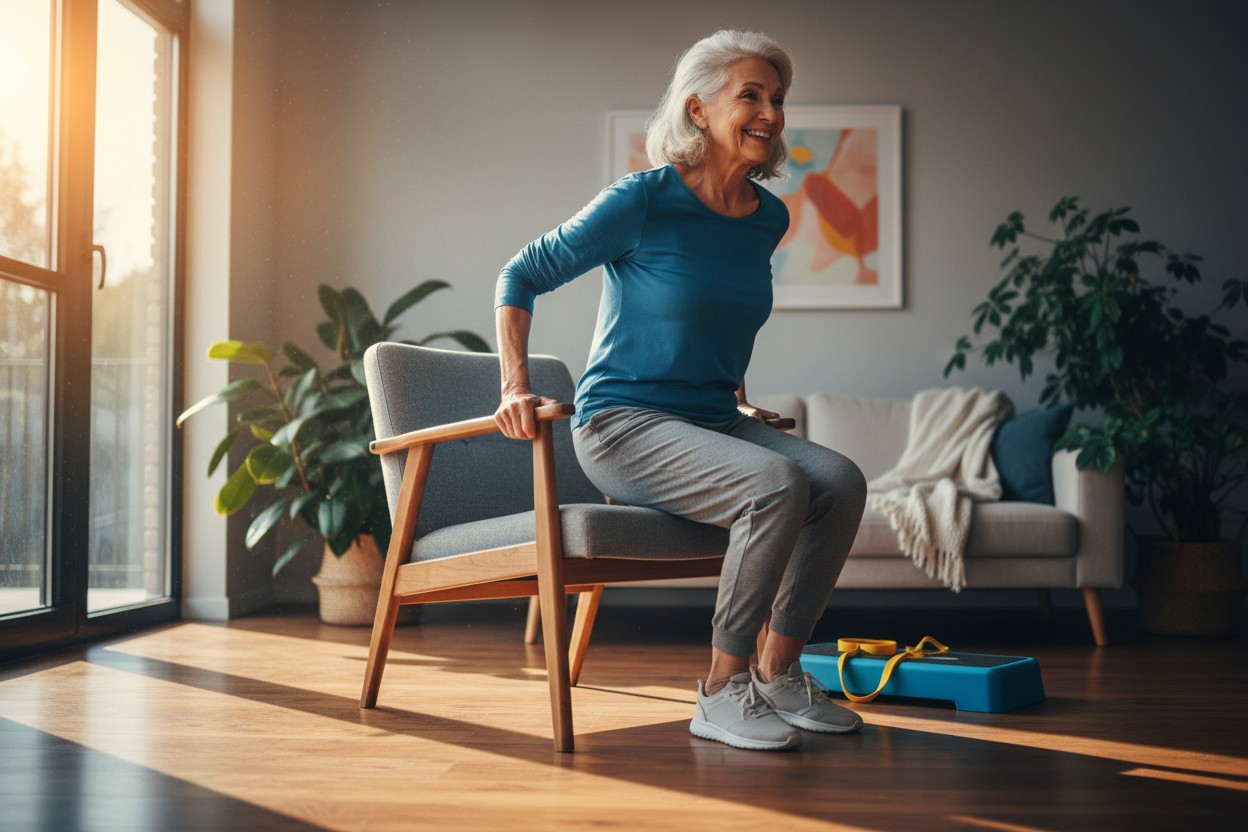
Four minutes of daily home strength exercises improved mobility, balance and leg strength in adults aged 65 and older, according to a new study from the Penn State College of Medicine.
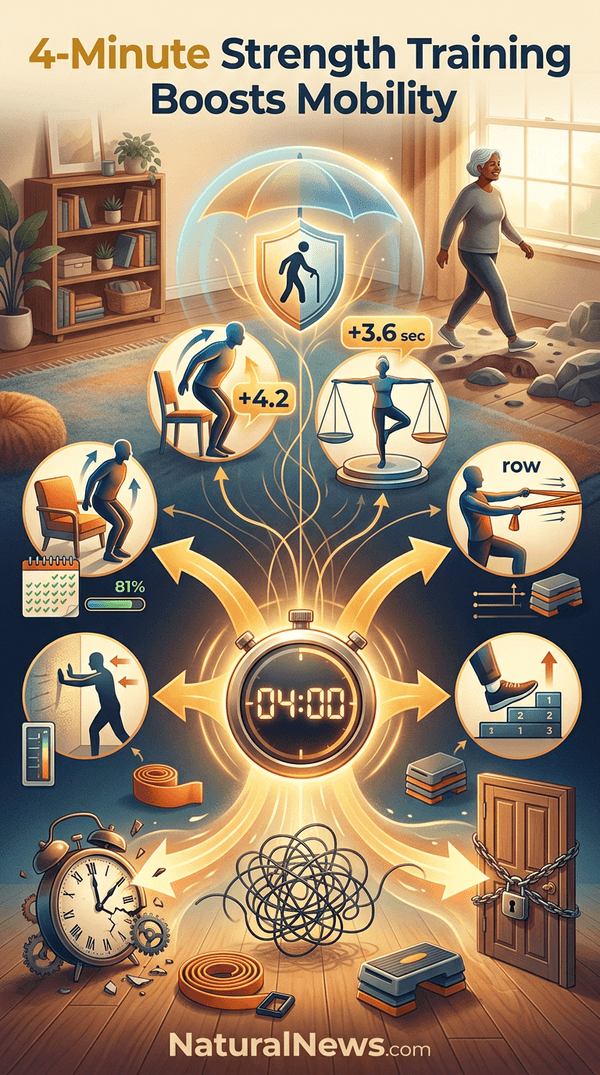
The research, published in the journal PLOS One, tested the Functional Activity Strength Training (FAST-2) program, a four-minute circuit performed in 30-second intervals with 30-second rests. After 12 weeks, participants who exercised showed measurable gains, including an average of 4.2 more repetitions in a 30-second chair-stand test, a 2.3-second faster sit-to-stand time, and 3.6 seconds longer one-legged balance compared with a control group that received no intervention.
The study enrolled 97 sedentary adults with an average age of 74 who were averaging only 18 minutes of total physical activity per week before enrollment. Participants were randomly assigned to either the daily exercise group or the control group.
The routine included four movements: push-ups, chair stands, two-arm resistance-band rows, and stair stepping using an adjustable step platform. Written explanations and modifications were provided to ensure accessibility, such as performing push-ups against a counter or wall.
Study Design and Participant Characteristics
Researchers evaluated the participants, with an average age of 74, who were averaging 18 minutes of total physical activity per week before the study, according to the press release. They were randomly split into an exercise group performing the four-minute daily routine and a control group receiving no intervention.
The routine included chair stands, push-ups (with wall or counter modifications), two-arm resistance-band rows, and stair stepping using an adjustable step platform. Written explanations and simple modifications were provided to ensure accessibility for older adults.
As part of the design, participants performed each of the four exercises for 30 seconds, followed by 30 seconds of rest, completing the full circuit in four minutes. Researchers provided elastic resistance bands and an adjustable step platform. As participants grew stronger, they were encouraged to progress to higher levels of difficulty, such as reducing modifications or increasing the height of the stepper.
Measured Improvements in Mobility and Balance
After 12 weeks, the exercise group performed an average of 4.2 more repetitions in a 30-second chair-stand test compared with the control group. The exercise group also shaved 2.3 seconds off their time in a test measuring five consecutive sit-to-stand repetitions. One-legged balance time increased by an average of 3.6 seconds among the exercise group.
Lead author Christopher Sciamanna, professor of medicine and of public health at Penn State College of Medicine, stated in the press release that these indicators predict future risk of falls, nursing home admission and difficulty walking. “These indicators… give you a sense of whether or not you’re going to be able to be active in the future,” Sciamanna said. Co-author Smita Dandekar, associate professor of pediatrics at Penn State College of Medicine, said that making exercise short addresses common barriers such as complexity and time constraints, according to the press release.
Adherence and Limitations of the Study
Participants completed workouts on 81% of tracked days, a rate researchers described as exceptionally high for home exercise programs, according to the press release. The study had a small sample size and a short 12-week time frame, leaving long-term sustainability unknown. Researchers did not specify exact dropout rates or detail how the routine might affect seniors using assistive devices like walkers or canes.
Further investigation is needed to determine safety and benefits for those with more severe physical limitations or cognitive decline, according to the press release. The study was funded by the National Institutes of Health, and the authors reported no conflicts of interest.
Implications and Context
Standard public health guidelines recommend at least 150 minutes of moderate exercise per week, but fewer than one in five older adults meet muscle-strengthening recommendations, the study noted. The four-minute routine may offer a low-barrier alternative for sedentary older adults. Researchers emphasized that the results require replication in larger, longer studies before widespread recommendations can be made.
Age-related muscle loss, known as sarcopenia, affects an estimated 10% to 25% of older adults under age 70 and half of those over age 80, according to an article on Mercola.com [1]. Strong muscles are essential for mobility, balance, and independent living [2]. Functional fitness tests, such as the chair-stand test used in this study, are considered more sensitive than traditional cardiorespiratory measures for assessing mobility risks in older populations [3].
Regular exercise also helps maintain bone density and prevents age-related muscle decline [4]. A recent study found that resistance training of about 120 minutes per week is linked to lower dementia risk [5]. These findings support the broader trend of incorporating short-duration strength exercises into senior wellness routines.
References
- Mercola.com. “Can These Nutrients Help Prevent Muscle Wasti”. Mercola.com. November 25, 2022.
- Mercola.com. “Why Resistance Training Preserves Your Cardio”. Mercola.com. August 05, 2022.
- Rush Thompson PhD MS PT Catherine. “Prevention Practice and Health Promotion”.
- Morc Coulson. “The Complete Guide to Teaching Exercise to Special Populations Complete Guides”.
- NaturalNews.com. “New Study Links Strength Training to Lower Dementia Risk, Longer Life”. June 23, 2026.
- Mercola.com. “How to Help Prevent Sarcopenia After Age 40”. Mercola.com. November 23, 2022.
Explainer Infographic
Submit a correction >>
Tagged Under:
aging, aging secrets, anti-aging, benefit of exercise, Censored Science, elderly people, exercise, fitness, longevity, Men's Fitness, physical activity, physical exercise, research, resistance exercise, resistance training exercise, senior citizens, strength training, Women's Fitness
This article may contain statements that reflect the opinion of the author
RECENT NEWS & ARTICLES