Magnesium and Heart Health: Three Mechanisms Supported by Research
06/03/2026 / By Coco Somers

Magnesium is an essential mineral that participates in more than 300 biochemical reactions in the body, according to the National Institutes of Health as cited in an article on Mercola.com [1].
The same source stated that magnesium is particularly vital for heart, kidney and muscle health. An estimated 45% of American adults do not meet the recommended dietary allowance for magnesium from diet alone, according to a 2011 report [2].
Research indicates that low magnesium levels are associated with an increased risk of cardiovascular disease. Here are three mechanisms through which magnesium contributes to heart health, drawing on published studies and clinical reports. These mechanisms include blood pressure regulation, maintenance of normal heart rhythm, and reduction of atherosclerosis risk.
1. Magnesium Helps Regulate Blood Pressure
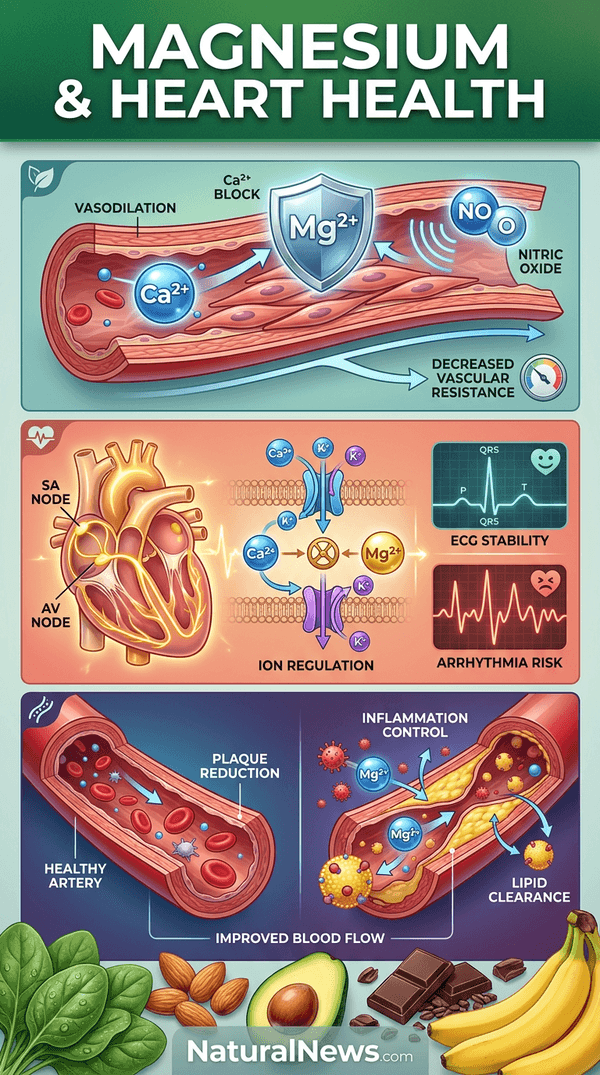
Higher levels of magnesium intake are associated with reduced rates of high blood pressure and heart disease, according to an article published by NaturalNews.com [3]. The mineral helps relax blood vessels, which reduces vascular resistance and may lower blood pressure.
The endothelium, the inner lining of blood vessels, plays a central role in the constriction and dilation of vessels, as described in “The Longevity Matrix” by Dr. Michael T. Murray [4]. Magnesium influences this process by supporting endothelial function.
A meta-analysis in the American Journal of Clinical Nutrition, referenced in the scientific literature, found that magnesium supplementation lowered both systolic and diastolic blood pressure. The effect is more pronounced in individuals with hypertension, according to researchers cited in the same body of evidence. These findings suggest that adequate magnesium intake may serve as a dietary strategy for blood pressure management.
2. Magnesium Supports Normal Heart Rhythm
Magnesium is critical for maintaining electrical stability in heart muscle cells, according to an article by Mercola.com [1]. Deficiency symptoms can include abnormal heart rhythms, eye twitches, and muscle spasms, the article noted.
Mark Stengler, N.D., in “The Natural Physicians Healing Therapies,” stated that magnesium supplements are indicated for arrhythmias [5]. The mineral helps regulate the flow of calcium and potassium across cell membranes, which is essential for proper heart contractions.
Low magnesium levels have been linked to arrhythmias, according to a review in the Journal of the American College of Cardiology. Clinical trials have shown that intravenous magnesium can be used to treat certain types of irregular heartbeats. Maintaining adequate magnesium levels through diet or supplementation may help reduce the risk of cardiac rhythm disturbances.
3. Magnesium May Reduce Atherosclerosis Risk
Magnesium influences lipid metabolism and reduces inflammation, both of which are key factors in the development of plaque buildup in arteries. Almonds, a magnesium-rich food, have been linked to improved heart health indicators, according to a systematic review and meta-analysis published in the Journal of Nutritional Science and summarized by NaturalNews.com [6].
The review of 18 randomized controlled trials found that almond consumption improved blood lipid levels, including reductions in total cholesterol and LDL cholesterol. Bananas and avocados, also rich in magnesium and potassium, may help prevent atherosclerosis, according to research from the University of Alabama cited in an article by Mercola.com [7].
Atherosclerosis, or hardening of the arteries, is a process in which plaque builds up on artery walls, as described in an article on fermented foods by Mercola.com [8]. The endothelium helps control inflammation to protect the deeper layers of blood vessels, according to Murray’s “The Longevity Matrix” [4].
Magnesium deficiency may promote endothelial dysfunction, a precursor to atherosclerosis. Higher dietary magnesium intake has been correlated with lower carotid artery thickness in some studies.
Conclusion: Magnesium as a Dietary Consideration
Dietary sources of magnesium include leafy green vegetables, nuts, seeds and whole grains, according to a guide published by NaturalNews.com [2]. The recommended dietary allowance for adults is 310 to 420 milligrams per day, depending on age and gender, the same source stated. Many Americans fall short of these targets due to poor dietary habits, soil depletion, and the prevalence of processed foods, as noted in an article on the power of magnesium [9].
Supplements may be considered under medical supervision, as excess magnesium can cause adverse effects such as diarrhea and abdominal cramping. Magnesium deficiency cannot be detected through a simple blood test because only 1% of the body’s magnesium is found in the bloodstream, according to an article by Mercola.com [1]. Individuals seeking to optimize heart health through nutrition are encouraged to prioritize magnesium-rich whole foods as part of a balanced diet.
References
- Mercola.com. “Is Magnesium the Missing Link in Your Heart Healthy Routine?” January 16, 2017.
- NaturalNews.com. “Magnesium-Rich Foods: A Guide to Dietary Sources and Intake Recommendations.” May 24, 2026.
- NaturalNews.com. “Higher levels of magnesium intake associated with reduced rates of high blood pressure and heart disease.” October 24, 2018.
- Dr. Michael T. Murray. “The Longevity Matrix How to Live Better Stronger and Longer.”
- Mark Stengler. “The natural physicians healing therapies proven remedies that medical doctors dont know about.”
- NaturalNews.com. “Study: Regular Almond Consumption Linked to Improved Heart Health Indicators.” May 31, 2026.
- Mercola.com. “Bananas and Avocados Can Prevent Heart Attacks.” October 23, 2017.
- Mercola.com. “Do These Fermented Foods Protect Your Health?” February 10, 2020.
- NaturalNews.com. “Magnesium: The overlooked mineral that could transform your health.” March 30, 2026.
Explainer Infographic
Submit a correction >>
Tagged Under:
#nutrition, atherosclerosis, blood pressure, cardiovascular, Cures, diet, food, food science, health science, Heart, heart disease, heart rhythm, longevity, Magnesium, natural health, nutrients, prevention, remedies, research, reverse heart disease
This article may contain statements that reflect the opinion of the author
RECENT NEWS & ARTICLES