Study: Breakfast After Noon Linked to 29% Higher Risk of Early Death
09/04/2026 / By Coco Somers

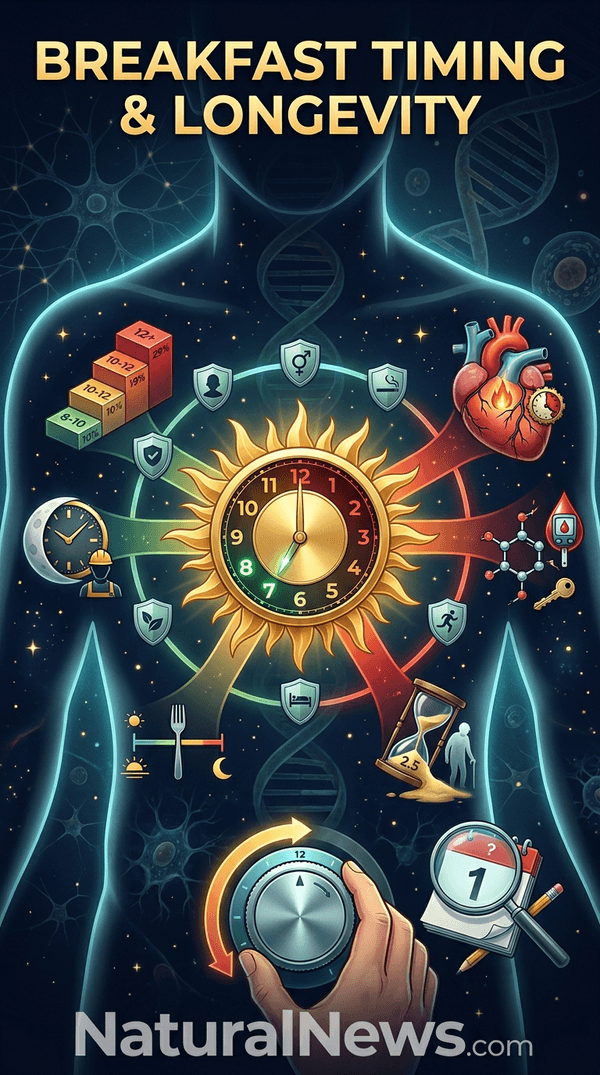
Adults over 40 who delay their first meal until after noon face a 29% higher risk of early death from any cause compared to those who eat between 7 a.m. and 8 a.m., according to a study published in the European Journal of Clinical Nutrition. The research, which tracked more than 31,000 adults, recorded their food intake and timing over a single 24-hour period, according to a New York Post report.
Study Design and Participants
The study’s participants, all aged 40 and older, recorded all meals and the times they were consumed within a 24-hour window, according to the report. The period between the first and last meal was defined as the eating window. Researchers compared mortality rates based on the timing of the first meal, using the 7–8 a.m. breakfast group as the reference point.
The analysis, reported by registered dietitian nutritionist Molly Knudsen, M.S., RDN, drew on data from the National Health and Nutrition Examination Survey (NHANES) [1]. The findings add to a growing body of evidence examining how meal timing intersects with metabolic health, an area also explored in research on late eating and cardiometabolic outcomes [2].
Mortality Risk Increases with Later Breakfast
Relative to the 7–8 a.m. group, eating between 8 and 10 a.m. was associated with a 10% higher risk of early death from any cause, according to the study. The risk rose to 19% for those who ate between 10 a.m. and noon. The pattern was more pronounced for cardiovascular outcomes: eating after noon was linked to a 46% higher risk of death from a cardiovascular event, such as a heart attack or stroke, according to the report.
The study also estimated that adults aged 50 and older who ate later had an average life expectancy nearly 2.5 years shorter [1]. This timing-related risk appears independent of the content of the meal itself, a distinction noted in prior research on caloric distribution. For example, studies have compared big-breakfast versus big-dinner dietary patterns, finding that the timing of calorie consumption influences weight loss outcomes even when total calories are held constant [3].
Limitations and Expert Comments
Senior author Zhilei Shan told ScienceAlert: “Later eating should be interpreted as a potential risk marker, and possibly a modifiable behavior, rather than definitive evidence of a direct causal effect.” The study considered only a single 24-hour eating window and did not account for sleep patterns, activity timing, or other potential confounders, which limits causal interpretation, according to the report.
Despite these limitations, the findings align with broader research on meal timing and metabolic function. The body’s circadian rhythm regulates digestion, blood pressure, and hormone production, and most genes exhibit daily fluctuations in expression [4].
Disruptions to this system, such as eating at times misaligned with the body’s natural clock, have been linked to poorer glycemic control and reduced insulin sensitivity [2]. The timing and volume of carbohydrate intake also play a role in managing blood glucose levels [5].
Implications
The findings add to growing evidence that meal timing may influence health independently of food choice, according to researchers. Experts recommend spacing meals four to six hours apart for stable blood sugar and metabolism, emphasizing balanced meals with protein, fat and fiber [6]. Further studies are needed to confirm whether adjusting breakfast time can reduce mortality risk, the study authors said.
References
- NaturalNews.com. “Study Associates Meal Timing With Mortality Risk in Adults 40 and Older”. August 18, 2026.
- NaturalNews.com. “Late Eating Linked to Poorer Blood Sugar Control, Research Review Finds”. June 21, 2026.
- Travis Stork. “The Doctors Diet”.
- Michael Greger MD FACLM. “How Not to Diet”.
- Toby Smithson and Alan L. Rubin. “Diabetes Meal Planning and Nutrition for Dummies”.
- NaturalNews.com. “Breakfast Formula Emphasizing Protein, Fiber and Healthy Fats Recommended for Sustained Energy”. July 29, 2026.
Explainer Infographic
Submit a correction >>
Tagged Under:
breakfast, chrononutrition, Dangerous, discoveries, early death, food science, health science, longevity, meal timing, men's health, real investigations, research, women's health
This article may contain statements that reflect the opinion of the author