Scientists discover alternative physical communication channel for NEURONS
12/16/2025 / By Lance D Johnson
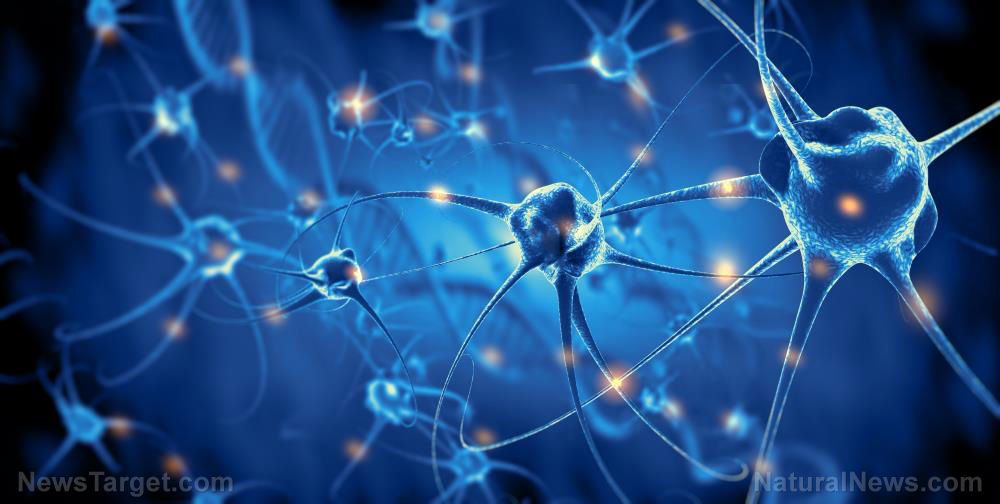
For decades, the language of the brain has been taught as a story of electrical storms. Neurons, we were told, communicate through precise bursts of charged particles, a lightning-fast dialogue that underpins every thought, memory, and movement. This electrical model became a cornerstone of neuroscience, shaping our understanding of everything from learning to neurological disease. But new research suggests neurons have been holding a secret, a quieter, more physical form of conversation that works in the shadows to keep our minds stable.
A study from the University of Southern California reveals that when critical communication between brain cells is disrupted, they can call for help not with an electrical shout, but with an alternative physical pathway, reorganizing their very architecture to send a signal. This discovery of a non-electrical, purely physical signaling system rewrites a fundamental chapter of brain science and opens a new frontier in the quest to understand neural resilience.
Key points:
- New research from USC Dornsife College reveals neurons can stabilize communication using a fast, physical mechanism, not the electrical activity long assumed to be required.
- When a key receptor on a neuron is blocked, it physically rearranges itself within the synapse, triggering a process that instructs the connected neuron to boost its signal.
- This process depends on a scaffold protein called DLG and continues even when all electrical activity is silenced, proving it is a structural, non-ionic form of signaling.
- The discovery provides a new framework for understanding “homeostatic plasticity,” the brain’s essential ability to maintain balance, and could guide future research into treatments for neurological conditions like epilepsy and autism.
Neurons communicate through physical signals too
Imagine the exquisite tension of a high-wire act. The performer constantly makes micro-adjustments, shifting weight, bending knees, and repositioning the pole to counteract every gust of wind and wobble. For neuroscientists, the brain has always appeared to perform a similar feat, maintaining the delicate balance of communication between its billions of neurons through a constant, energetic feedback loop of electrical signals. This balance, known as homeostasis, is the bedrock of a healthy mind. When it falters, circuits misfire, and conditions like epilepsy or autism can emerge. The prevailing wisdom held that if a receiving neuron stopped “hearing” its partner’s electrical message, it would signal back using its own electrical activity to say, “Speak up!” The new work, led by Professor Dion Dickman and published in the Proceedings of the National Academy of Sciences, shows the brain has a more elegant, immediate trick up its sleeve.
The team used the fruit fly, a workhorse of neuroscience, to probe this mystery. They focused on the synapse, the minuscule junction where one neuron reaches out to talk to the next. Here, the “sending” neuron releases chemical messengers called neurotransmitters, which cross the gap and dock with receptors on the “receiving” neuron, typically triggering an electrical response. The researchers chemically blocked these glutamate receptors on the receiving side, simulating a sudden failure in communication. Conventional theory predicted the receiving cell would notice the drop in electrical chatter and respond. But what the team observed was different. The blocked receptors didn’t just sit there idly; they physically moved, reorganizing their positions within the synaptic landscape. This architectural shift acted as a signal itself, initiating a cascade that sent a message back to the sending neuron to increase its output of neurotransmitters, restoring equilibrium.
This is akin to a rower feeling an oar lock jam not by a change in water resistance, but by a sudden, tangible strain in the wooden frame of the boat itself. The signal is felt in the structure. Through a meticulous process of elimination using CRISPR gene-editing, the scientists identified the linchpin of this process: a scaffold protein called DLG. Think of DLG as the master organizer of the synapse’s receiving dock, holding receptors in place and connecting them to the cell’s internal machinery. When DLG was genetically removed, this rapid compensatory response failed entirely. The most startling finding was that this entire restorative dialogue unfolded even when the scientists completely silenced all electrical activity in the synapse. The system operated on a separate channel, one built not on flowing ions but on physical form.
From electrical storms to structural whispers
This discovery forces a reconsideration of how we view the brain’s adaptability. For over a century, since the pioneering work of scientists like Santiago Ramón y Cajal, who sketched the brain’s intricate cellular forest, and Alan Hodgkin and Andrew Huxley, who modeled the electrical impulse of the neuron, the focus has been overwhelmingly on electricity and chemistry. Synapses were seen as relay stations converting chemical signals to electrical ones. The new research introduces a third, physical dimension to this conversation. It suggests the brain monitors its own integrity not just by listening to the noise of signals, but by constantly feeling the shape and arrangement of its components.
This structural plasticity offers a potential explanation for the brain’s remarkable resilience. Life constantly challenges neural circuits: with fatigue, with stress, with the minor insults of aging, or the profound disruptions of disease. The ability to make rapid, physical adjustments could provide a first line of defense, a way to stabilize the system before slower, gene-expression-based repairs kick in. It complements our growing understanding of other physical aspects of brain health, such as adult hippocampal neurogenesis—the birth of new neurons in a region critical for memory and resilience. Where neurogenesis is like building new roads over weeks and months to improve a city’s traffic flow, this newly discovered structural signaling is like instantly rerouting cars around a pothole the moment it appears. Both are essential for maintaining the flow of information.
A new path to understanding resilience and disease
The implications of this research ripple outward, touching on some of the most pressing questions in mental and neurological health. If the brain relies on this physical signaling system to stay balanced, what happens when it is chronically impaired? Could a breakdown in this structural communication contribute to the neural instability seen in epilepsy? Might subtle deficits in how synaptic scaffolds like DLG organize themselves underlie some of the connectivity issues associated with autism spectrum disorders? The study provides a new target for investigation, shifting the search for therapeutic interventions from solely modulating electrical or chemical activity to potentially strengthening the physical architecture of the synapse itself.
This perspective also invites a broader reflection on the conditions that erode or fortify our neural foundations. Previous research has highlighted how factors like social isolation, monotony, and chronic stress can lead to hippocampal shrinkage and dampen neurogenesis, diminishing cognitive reserve and resilience. These are slow, metabolic assaults on the brain’s structure. The USC study reveals a faster, more dynamic layer of structural adjustment. It paints a picture of a brain that is not a static circuit board but a living, physically malleable organ, constantly remodeling its microscopic connections in real time to withstand the pressures of existence. Understanding how to support both the rapid, physical whispers between neurons and the slower growth of new ones may be key to fostering the mental agility and endurance needed in an increasingly complex world.
Sources include:
Submit a correction >>
Tagged Under:
autism, brain function, brain health, breakthrough, cognition, CRISPR, discoveries, Epilepsy, Homeostasis, memory, Mind, Neurogenesis, neurology, neurons, neuroscience, plasticity, real investigations, research, resilience, signaling, structural biology, synapses, synaptic transmission, USC research
This article may contain statements that reflect the opinion of the author
RECENT NEWS & ARTICLES